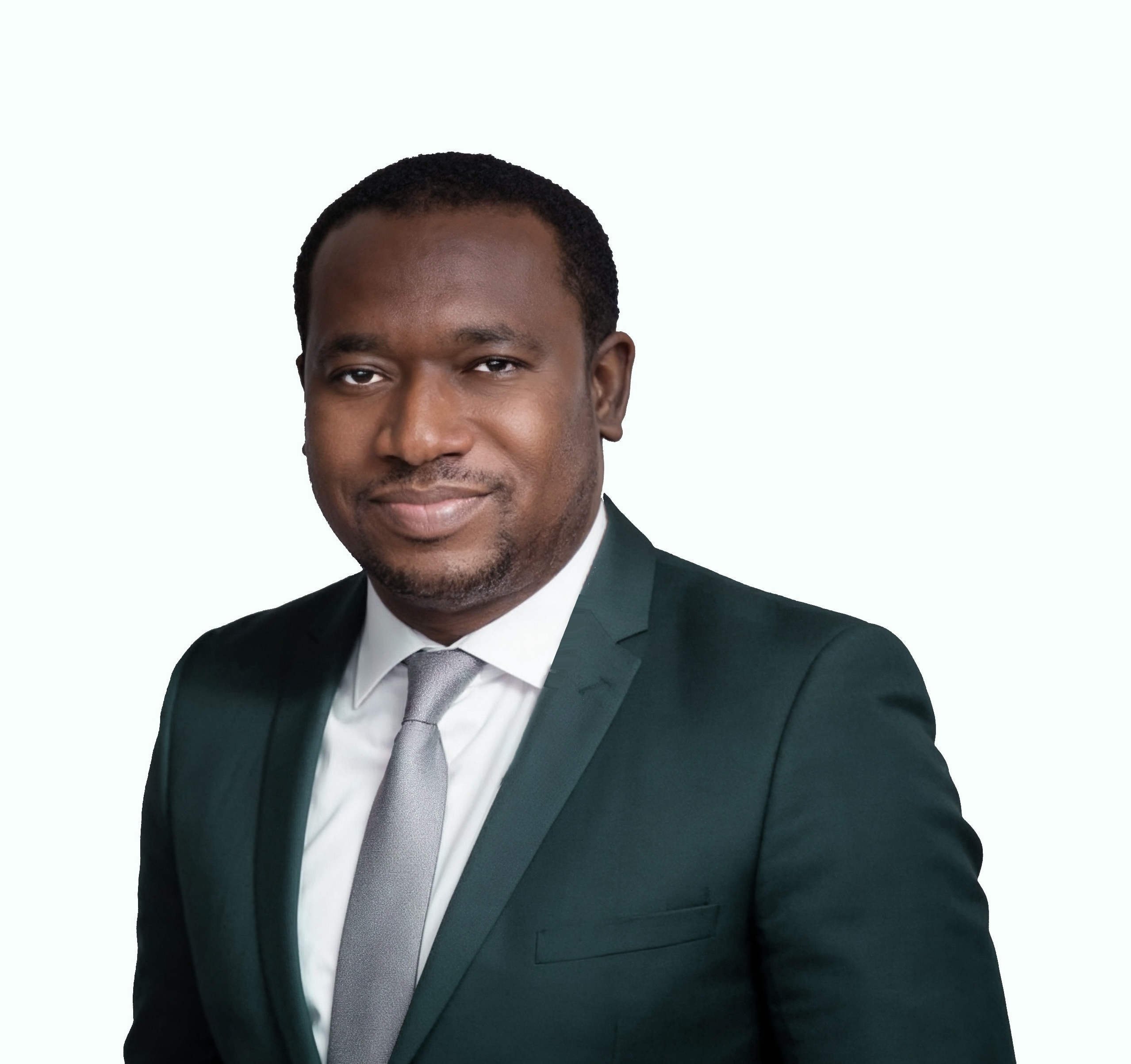
By Osa Odiase, Acting CEO, 9 Payment Service Bank
Financial inclusion in Nigeria is no longer a peripheral objective—it is a national imperative. As a catalyst for economic growth, poverty alleviation, and social equity, financial inclusion must continue to sit at the heart of our development agenda as millions of Nigerians remain outside the formal financial ecosystem, and it is our collective responsibility to bridge that divide.
Recognizing this, key stakeholders across the financial services landscape, including fintechs and non-Bank Payment Service Providers, Payment Service Banks (PSBs), commercial banks, and the Central Bank of Nigeria (CBN) have intensified efforts to drive financial access at scale. Though the 2024 target of 95% inclusion remains ambitious, the trajectory is encouraging. Through innovation, policy support, and ecosystem collaboration, we are steadily moving toward a future where every Nigerian can fully participate in the financial system, irrespective of geography, income level, or digital literacy levels.
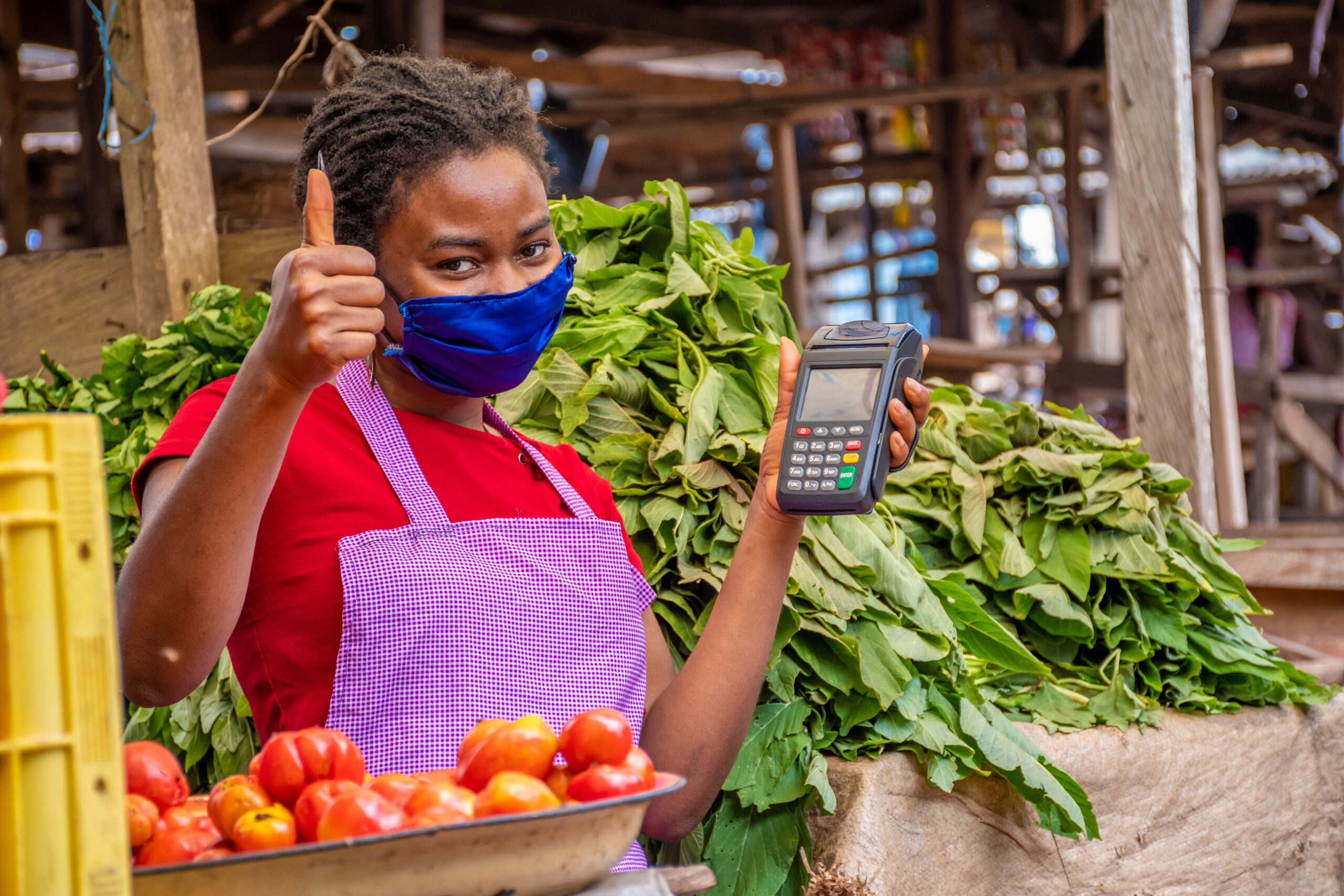
A shallow focus of an African female with a facemask holding a POS machine at a marketRecent progress is telling. According to the Enhancing Financial Innovation and Access (EFInA) recent survey report, financial inclusion rose to 74% in 2023 against 56% in 2020, bringing the figure closer to the Central Bank of Nigeria’s (CBN) financial inclusion target of 95% by 2024. Now, it is 2026, and there are still more grounds to cover. Although there is still more work to be done, this incremental growth reflects the power of deliberate policy interventions, such as the establishment of PSBs, designed to deliver financial services to Nigeria’s most underserved populations.
As a Payment Service Bank, 9PSB s strategically positioned to lead this transformation. By deploying digital-first infrastructure, expanding agent networks, and forging smart partnerships, through our agent networks and Banking as a Service (BaaS) APIs that enable reach to the unserved and underserved in rural and peri-urban communities where traditional banking has historically struggled. Our technology-driven approach allows us to provide and enable low-cost, high-impact financial solutions — unlocking opportunities for individuals and small businesses alike.
The broader ecosystem is also rising to the challenge. Initiatives like the Shared Agent Network Expansion Facility (SANEF), alongside the efforts of Super Agents, mobile money operators, and digital financial service providers, are extending financial access across all 774 local government areas in Nigeria. These collaborations are laying the foundation for a more inclusive economy.
However, inclusion goes beyond infrastructure. To truly embed financial access into the fabric of society, we must accelerate investment in nationwide digital infrastructure, enhance financial literacy, develop solutions in local languages, and design products that are intuitive and affordable. Importantly, we must foster cross-sector collaboration—regulators, financial institutions, telecom providers, and civil societies must align around a shared vision of inclusive growth.
The reality remains that while Nigeria’s internet penetration according to the Nigeria Communications Commission as of 2025 stands at approximately 48.81%, much of that access is concentrated in urban centers. Bridging this digital divide is non-negotiable. Expanding rural connectivity and supporting last-mile financial service delivery must be a national priority.
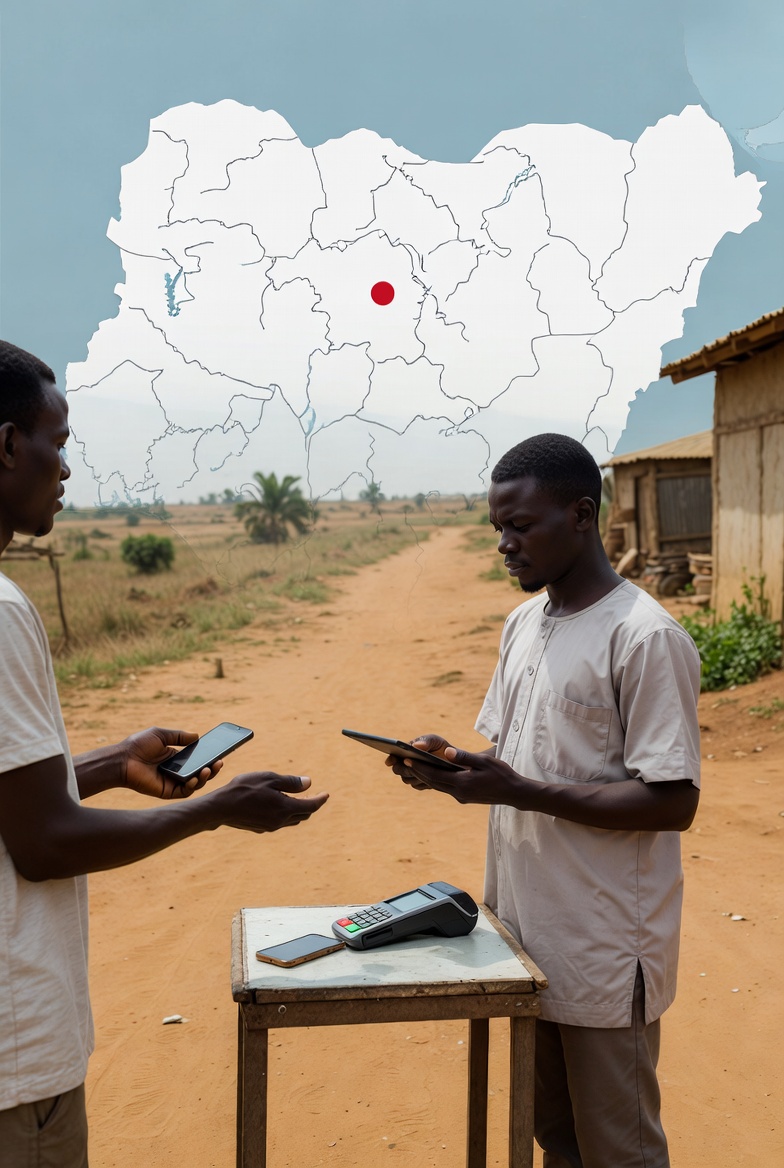
As players in the Payment Service space, we are committed to powering this next phase of inclusive economic growth. From providing scalable technology for small enterprises to securing digital transactions and supporting fintech innovation, we are building the infrastructure of trust and access. Our mission is clear — to democratize finance for all Nigerians.
Financial inclusion is not a checkbox. it is the foundation of a resilient, equitable, and prosperous Nigeria. As the digital economy accelerates, we must ensure no Nigerian is left behind. The opportunity before us is immense, and with the right partnerships and sustained commitment, we can unlock the full potential of our people and economy.